
What a Halloween Scare Does to Your Brain — It May Be Good for You
New research shows how “safe fear” strengthens emotional regulation, social connection, and even physical resilience.

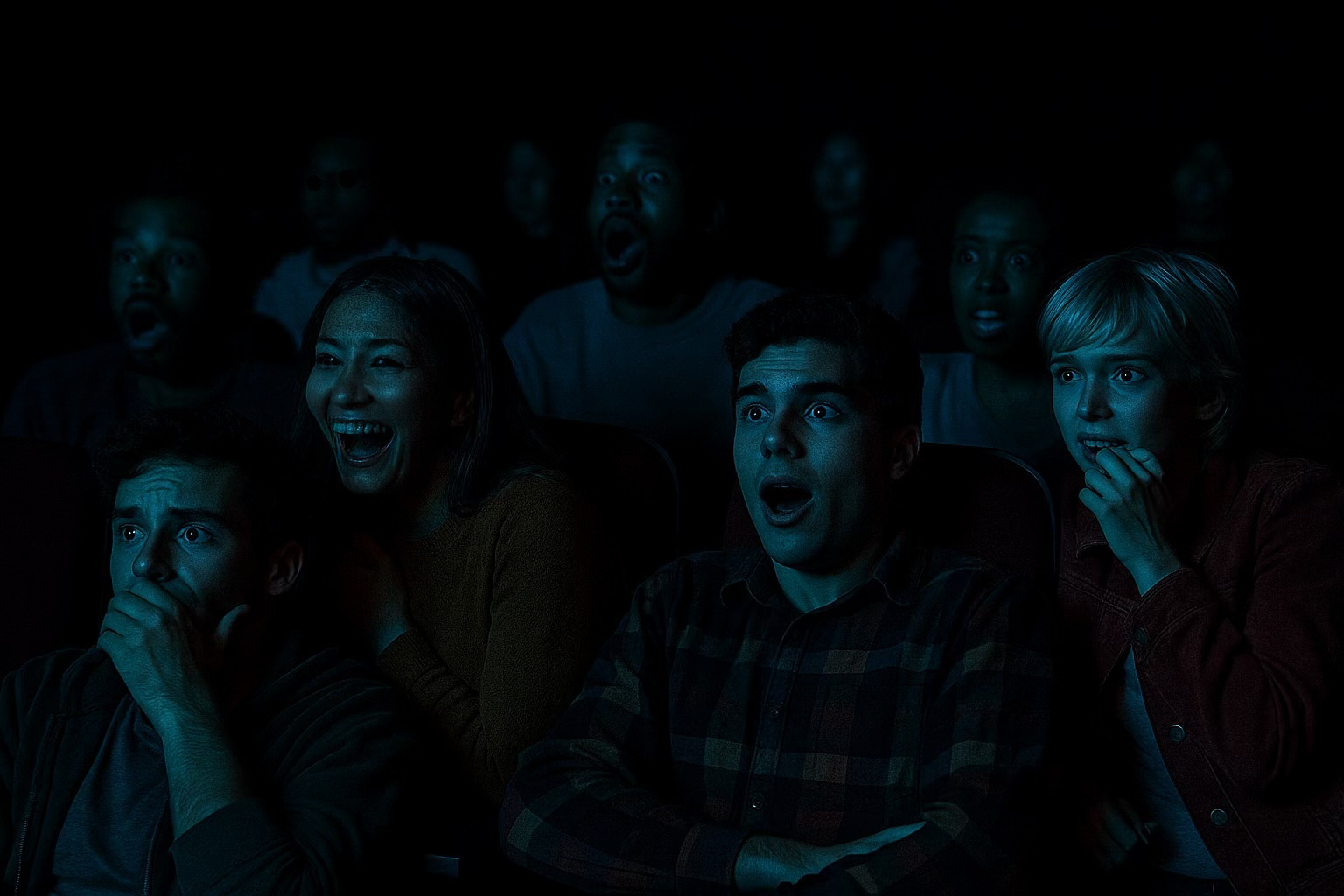
Editor’s Note: This story is adapted from my original Los Angeles Times feature “A Halloween Scare Can Sharpen the Brain,” updated with new research on how controlled fear helps us adapt and thrive.
Every October, millions of us line up for haunted houses, stream horror marathons, and swap ghost stories we half-believe.
We go looking for fear.
It sounds irrational until you realize how much the brain learns from being safely afraid.
Because in the right dose, fear doesn’t weaken us. It sharpens us.
Fear as Practice
In 2013, I wrote that horror lets many of us engage our threat-detection systems while knowing we’re safe. Since then, additional research has mapped more of the science.
At Denmark’s Recreational Fear Lab, directed by Marc Malmdorf Andersen and Mathias Clasen, they fitted haunted-house visitors with heart-rate monitors. The data revealed a perfect curve: too little fear was dull, too much was distressing — but moderate fear produced the most enjoyment and the most learning.
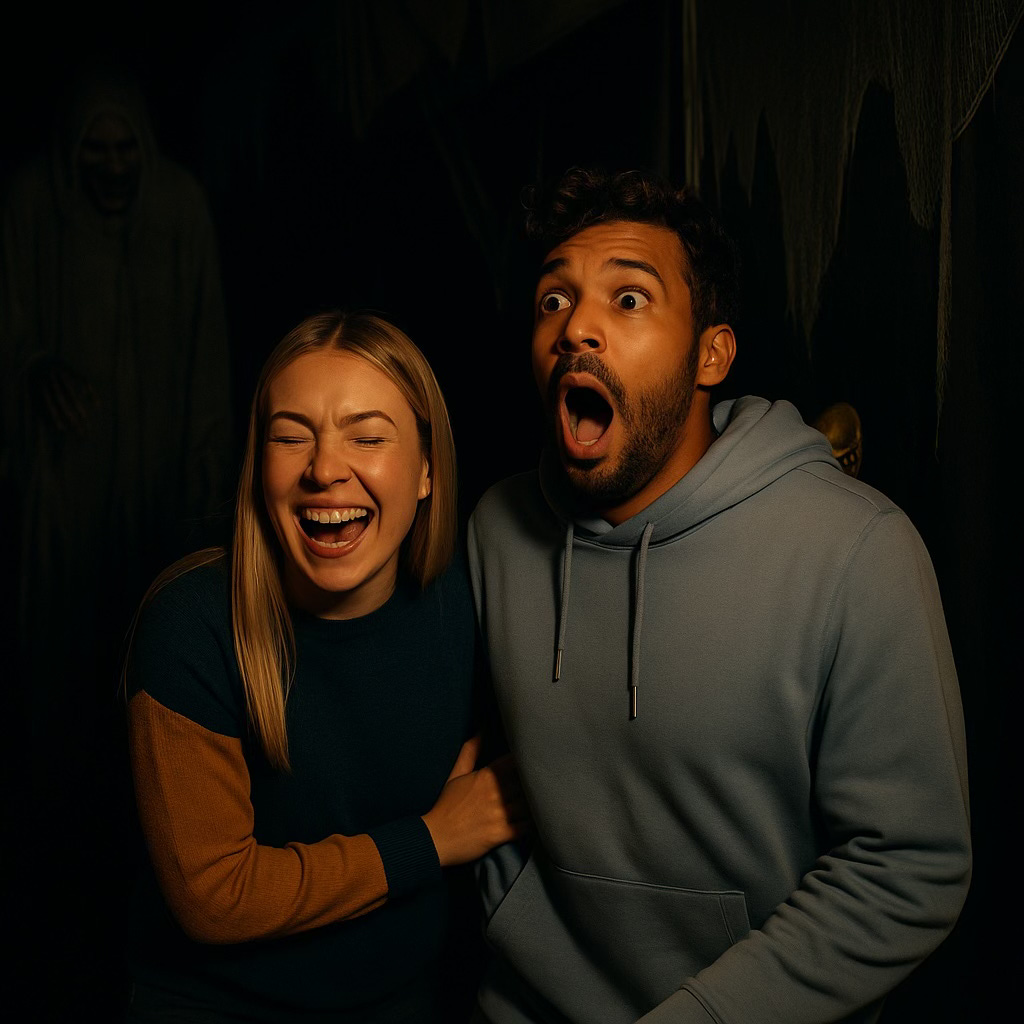
We don’t crave terror. We crave calibration.
What the Brain Is Rehearsing
Recent imaging work shows that dopamine, the same neurotransmitter behind reward, also encodes fear learning and extinction in humans.
A “safe scare” acts like an emotional drill: you activate the circuitry of alarm, then let it stand down. Each repetition strengthens your ability to return to calm faster — the same resilience loop used in exposure therapy.
Preliminary research even hints that these controlled bursts of arousal can lower low-grade inflammation afterward. Fear in a recreational setting may actually have a positive impact on the immune system.
Fear can be restorative.
Fear as Social Glue
There’s a reason we grab the nearest arm during a jump scare.
A 2024 Royal Society Open Science study found that sharing intense emotion increases bonding — even between strangers.
And during the pandemic, horror fans showed better coping and emotion-regulation scores, perhaps because they’d been practicing controlled anxiety all along.
Fear, it turns out, can connect us.
From Evolution to Empathy
What earlier generations knew intuitively—that a ghost story could thrill a campfire into togetherness—is now being quantified by neuroscience.
We evolved to fear because danger taught survival.
We refine fear because practice teaches poise.
The same surge that quickens your pulse in a haunted maze is the one that steadies you before a high-stakes meeting, a medical scan, or a first date.
How to Use It Well
Find your sweet spot. Choose suspense over gore; tension you can release.
Share it. Fear dissipates faster in good company.
Reflect afterward. Notice how quickly you recover — that’s emotional fitness.
Protect vulnerability. Skip intense content for kids or if you’re recovering from trauma.
In small doses, fear is an emotional gym. It primes the body, engages the mind, and teaches recovery — then lets us laugh in relief.
The Takeaway
A good scare is a rehearsal for courage.
It primes the body, engages the mind, and helps us recover faster.
In an anxious age, that might be the healthiest thrill of all.
Author’s Note
Full disclosure: I don’t actually like scary things — at least not the violent or gruesome kind. You can count me out of any “Jason” movie, slasher flick, or haunted maze that jumps out at you with fake chainsaws. The scariest thing I’ve ever watched was “The Shining” — at age ten, on a small, black-and-white TV rerun with commercials — and I probably shouldn’t have been watching it to begin with.
I’ll take my adrenaline rush on a roller coaster or a zip line, thank you very much.
Further Reading
Recreational Fear Lab, Aarhus University
MIT News: Dopamine signals when a fear can be forgotten
Dopamine and fear memory formation in the human amygdala
Unraveling the effect of recreational fear on inflammation
Get more stories on the neuroscience of awe, fear, and joy — and how understanding your brain can help you thrive.
Subscribe to Well Happy Thrive below.
Disclaimer:
This story is for informational and educational purposes only and is not intended as medical, psychological, or psychiatric advice. It discusses recreational and controlled experiences of fear, not exposure to actual danger or trauma. Always seek the guidance of a qualified physician, mental-health professional, or other licensed provider with any questions you may have about anxiety, stress, or emotional well-being. Never disregard professional medical advice or delay seeking it because of something you have read here.